Search

twofunkyhearts

welcome to my (mis)adventures

Author

twofunkyhearts

Kundalini Yoga, The Secret to World Domination (but Without Attachment to it)

I have an ex-boyfriend who is an ex-Marine. I remember him telling me about the brutality of their bootcamp, the physical limits they crossed and the sheer cruelty of their punishments. I had expected punishment would be something physically demanding, especially gruelling, scary and definitely ultra important. But punishments weren’t like that at all. They were completely useless – which is what made them most effective.

In a schedule that allowed virtually no free time, punishment would be exacted for the smallest infringements – like not putting the cap back on the toothpaste during your two minute “shit, shower, shave”. The offender would be sentenced to a task that was both menial and meaningless, like digging a hole and filling it up again. Raking leaves to scatter them again. Copying every third ‘e’ in a book and burning the pages. For hours.

This is kind of what Kundalini yoga is like. Demoralizing, incredibly cruel, and seemingly futile . However – probably similar to the Marine-style punishment – through performing a set of postures/asanas (called a kriya) that are physically punishing while at the same time seemingly utterly, despairingly useless, you reduce your sense of ‘I’, gaining perspective, toughness, and – dare I say it – you get a glimpse of enlightenment (though I wouldn’t apply the term ‘enlightened’ to that ex of mine).

Take the first asana of the day: raise your arms above your head, fingers closed in a fist except for your thumb which sticks up in the air. Close your eyes. Now start breathing in and out of your belly, using your abdominal muscles to both expand and contract the abdomen. Contraction expels the air out of your nose. Quick, short, deep breaths are the point here. Sounds easy, right? Try it. For 5 unending, hell-fire-in-you-arms, dry-arid-nostril minutes.

Somehow you survived? Great, let’s go on to the next asana. Extend your arms in front of you inline with your shoulders. Again, hands are in tight fists (thumb touches the inside of your first pinky knuckle on the palm). Circle your wrists in opposite directions. After minute 3 try to keep breathing even though you would prefer to let the black relief of unconsciousness wash over you instead.

One more? Again, raise clenched fists above the shoulders, not in defiance but in divine surrender to your evil Kundalini teacher who is dressed completely in white with a puritan headscarf but is really the devil incarnate. Elbows are straight, arms at a 60 degree angle above the head. Now all you have to do is release the fist and stretch your fingers wide. Close fist. Repeat. 6,000 times or until Death finally finds you and you cry out of sheer relief and joy that the pain is finally going to be over.

Can a Marine do this? I really would love to know.

For me, it’s incredibly similar to Vipassana meditation (one day I’ll write a post about that as it was one of the most important and formative experiences of my life, but for a good introduction check out this blog here). The process  followed in Vipassana and Kundalini is full of completely self-inflicted pain and suffering. However, a moment comes – if you’ve really committed to it – where you transcend the agony and you stop hearing the screams of the million dying neurons in your crossed legs, and you instead feel your body as an entity that is not exactly you. You’re still there, still inflicting torture on yourself, and you’re in complete control. However you have this deep understanding that your body isn’t what you are. You discover this sense of separateness from the basic physical and mental form and realize there’s this wondrous power of observation, of seeing yourself with a body instead of just integrated with all of the physical world. It’s magic.

(Or maybe just masochism and delusion.)

Babel in Yogalon

We’ve got 15 students and seven languages at last count. It makes for some funny moments – some sentences start in English, switch to Spanish and finish in German.

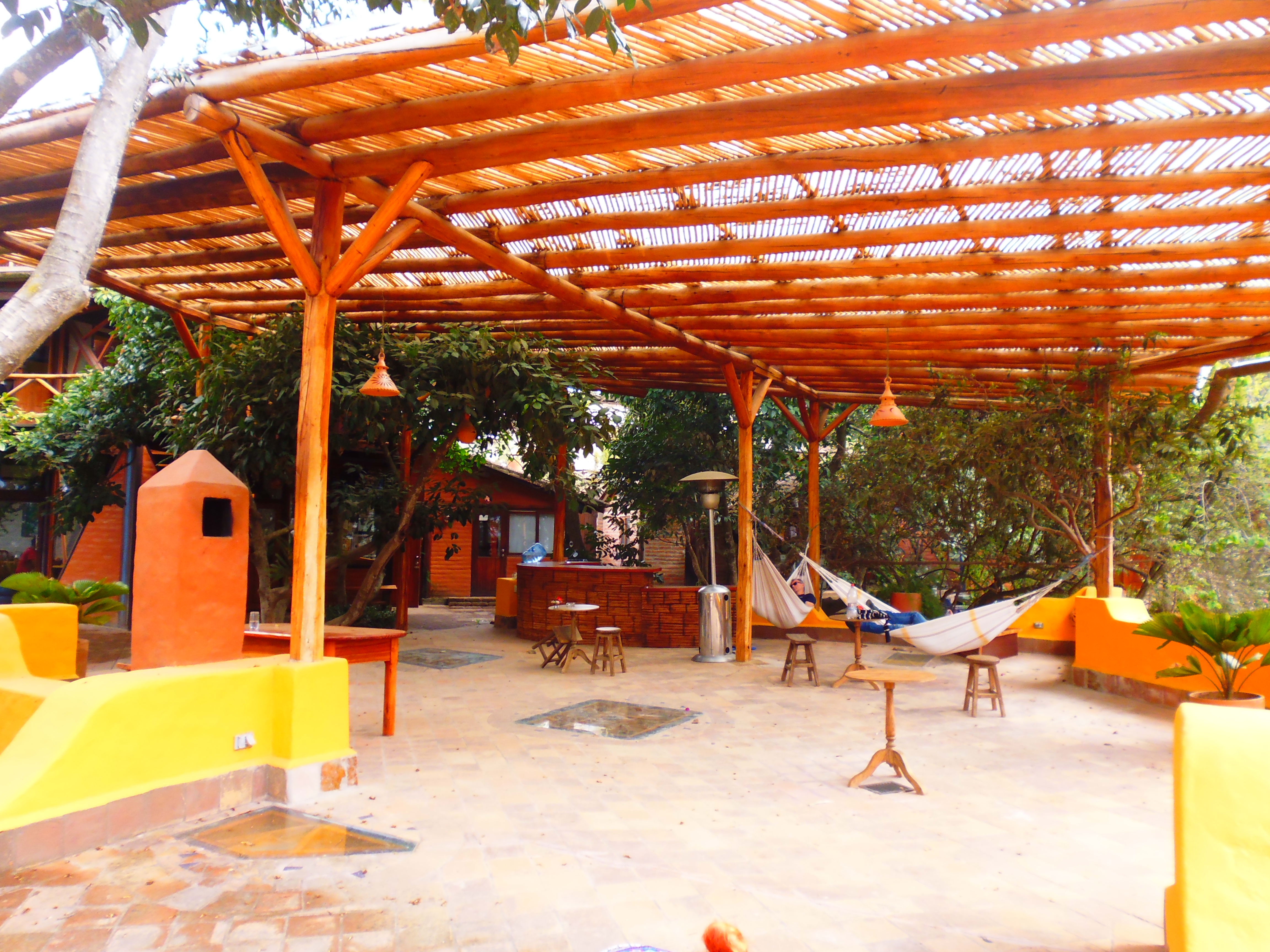
Language is a funny thing – despite all these ways we have to communicate with each other, I’m having the hardest time writing anything while here. So I’m resorting to pictures to show you where I’m at.

Life is good!

*Correction: We’re up to 9 languages! 

P1000075 P10000782015-10-26 10.55.38 P1000076 2015-10-26 10.55.16

Temazcal Yogis: Teacher Training Initiation

A few weeks ago I finally committed to doing my yoga teacher training. I’d been thinking about doing it for quite some time, and even started two programs while in India 8 years ago, but the timing and feeling never were quite right.

Feeling somewhat aimless as I drifted around Colombia last month, I thought it was time to commit. I had investigated a couple of schools and finally I chose Durga’s Tiger School on the outskirts of Quito, Ecuador. I wondered how woo-woo it might be, with a name like that and a reported focus on Tantra, Yoga and Shamanism. Each of these things I believe in deeply, however part of me is always suspicious about authenticity and didn’t want to be lulled into a centre that watered down sacred rituals as a soft cultural experience for foreigners.

This school is not that.

With 14 students, two of them men, we come from all walks of life. Some local, some (North) American, Spanish, German, Swedish, a guy from St. Kits. We’re a rainbow of sorts, with varying levels of experience. Obviously none of us have come from the depths of South American jungles, nor do we have a sadhu in our mist, but the atmosphere we’ve entered has catapulted us into a space of genuine connection and real vulnerability with each other.

The first night of teacher training started with Temazcal at Ruben and Tatty’s house, a 10 minute drive from the yoga centre. Temazcal is a ceremony, similar to a sweat lodge, where you enter into a pitch black tent and hot rocks are brought into the tent with a big pitchfork. Sweet grasses and herbs are added to the rocks, and the door of the tent is sealed, enclosing you in total darkness with only soft scents and the clammy leg of the person next to you touching your hand in the blackness.

Immediately a girl in our group begins to cry… The feeling is claustrophobic and the darkness is complete. I like it, but can see how scary it is. Water is then poured on the stones, and Ruben begins to tell the story of Temazcal, with Tatty translating. Ruben explains the significance of 4 rounds of Temazcal: each round represents a different element, with each getting progressively hotter with the addition of new stones. As the stories go on, and songs are sung together, there are several people in our group of 15 feeling uncomfortable, scared, too hot, too cold, suffocated. The girl who was crying breaks into a panic. Ruben directs his words to her, telling her how we’re all here for her and to stay with the experience. It’s powerful; collectively we pray for her, hoping she will remain in this experience to ultimately let go of the fears holding her back. We all are awed by her strength as she choses to stay – not just this round, but for the first two. Going around the circle, we all identify ourselves, explain why we are here and what we wish to release during the ceremony. As we sing and pray our way together through the four rounds of Temazcal (Water, Air, Earth and Fire), each round gets more intense, but thankfully each is shorter than the last. In the blackness I lay down in the fetal position. It’s comforting – the ground takes the heat from your body and you feel supported by the earth below. Finally, leaving the Temazcal four hours later, the sky has turned to night. We stumble out head first, our exit from the tent, a symbolic rebirth into the world. The cool air hits sweaty skin and immediately you feel lighter, physically, mentally, spiritually. This sets into your body at such a deep level that there’s nothing to do but lay on the grass and let it soak down into your bones.

La Piña Express: Adventures with Jhon Fredy

5 pineapples, 2 papayas, 1 cactus, 18 tobacco leaves, 4 buses, 78 sandfly bites, 2 earthquakes, 28 hours, a whole bunch of ants, 4 feet.

The world’s second largest canyon lives in Colombia. Called Chicamocha, it’s a stunning feat of nature nestled between techtonic plates that bump and grind about 20 times every day.

Last week I hiked the canyon with my friend Jhon Fredy, who you may remember from a previous post. We set off late in the day on Tuesday, taking a bus from San Gil to Villa Nueva, stopping for supplies in the market before leaving and eating avocado, red pepper, bread and cheese wrapped in a banana leaf for lunch under a huge tree.

Jhon Fredy is an amazing guy. He doesn’t speak English and my Spanish is seriously limited, but somehow we communicate just fine. He exudes peacefulness, calm and has this connectedness which raises you up just by being with him. People seem to love to give him stuff, not sure why, it just happens all the time.

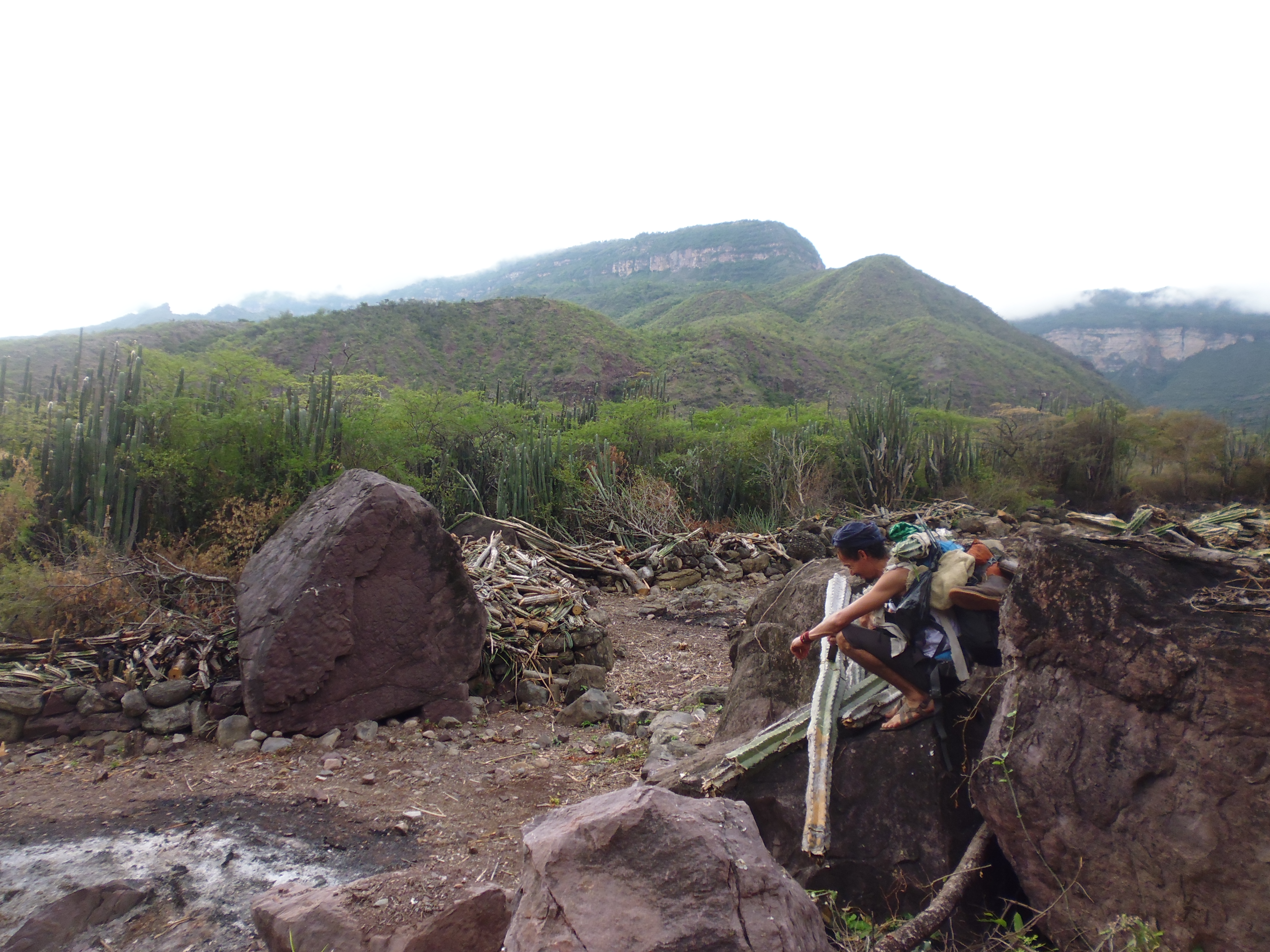
From Villa Nueva, it’s about a 4 hour walk to the little ghost town of Jordan at the bottom of the valley. We were lucky leaving late in the day that the sun was past it’s hottest point, and started the trek around 2 or 3pm. There are farms along the way, mostly tobacco and pineapple, with papaya as you get deeper into the canyon. Pineapple fields look beautiful and a bit surreal to me. I commented to Fredy how much I like them and he chatted with a few farmers who ended up giving us a pineapple for our journey. Then another guy appeared and gave us a pineapple, then their kids came carrying pineapples to us – by the time we left the field we had 5 pineapples freely given, fresh from the field. Pineapples are heavy and we didn’t have room to carry them so I made a sling out of my sarong and put them inside.

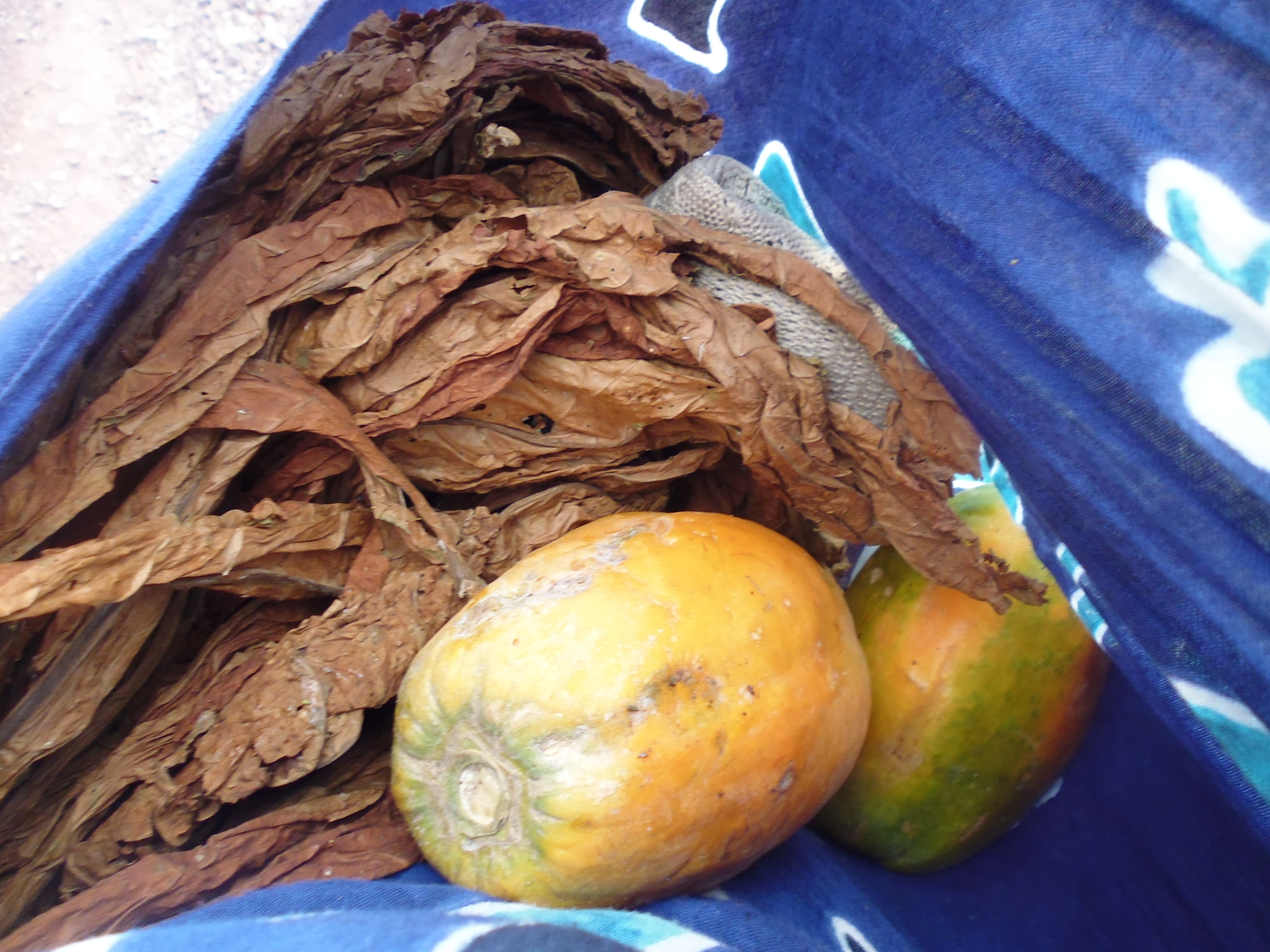
Later we came across a tobacco farm. Fredy talked with the farmer there who was inspired to give us two huge sheaths of pure, organic tobacco leaves. They smelled beautiful and were a huge gift – also put into the sarong for safekeeping.

The canyon is an incredibly beautiful place, with a full spectrum of colours, from deep purples to bright oranges, mellow greens to the shocking reds and yellows of tropical flowers. As we walked on dusty clay trails, dusk set in and the twinkling lights of the fincas in the valley greeted us.  Huge aloe vera plants lined both sides of the trail and, along with numerous other desert plants, created an atmosphere that felt like something out of the deepest recesses of your imagination. Jhon Fredy wandered off into the bush as I examined the giant aloes. He came back a few minutes later with a gift from nature – a 3 foot long cactus, San Pedro.

As we dawdled it grew dark and by the time we met the road leading to Jordan we were using our headlamps to descend. Unknowingly we turned the wrong way and walked for a kilometre uphill until we found a structure with a roof on semi-flat ground and made plans to sleep on some cardboard left behind by farmers. It wasn’t the poshest night I’ve spent, but it was amazing. The stars were in full force and the energy of the place pulsed with the cicadas. Each rustle in the bush would make us both start and sit up, waiting and listening.

Just as I was finally relaxing enough to get some sleep, Jhon Fredy jumped up. He had been swarmed by hundreds of little red ants. Looking in his bag we realized they had infiltrated our supplies – the bread, cheese, fruit and vegetables were covered with a red army of ants. We threw everything to the side and did what we could to get them off our cardboard. Finally, after quite some time we managed to return to a more tranquil state and JF slept immediately. I, on the other hand opted to meditate under the stars, breathing an incredible feeling of aliveness, loving each sound of the insects, the rustle of papaya trees, blissed out. Twice the earth rumbled, small reminders that the earth we walked on is alive. With some irony I thought of the place where we were sleeping – outside on dirty old cardboard, surrounded by unknown sounds on top of an ant hill, and thought about how in my past life I slept at fancy Shangri-La Hotels. Yet I was so much happier with the ants and stars.

The next morning we got an early start, established we’d been walking in the wrong direction and set out for Jordan after thoroughly cleaning each and every item we carried of ants. On the way we found 2 ripe papayas waiting for us on the side of the road – it seemed that there was someone looking out for us. As we walked on I wished I could explain to JF what was so funny, but even if I could’ve explained in Spanish I’m not sure he’d have understood… To our left was a sign indicating we were passing “Shangri-La Reptile Farm”.

Arriving in Jordan I found the town decrepit and beautiful – rustic, ancient, peeling and disintegrating. We talked to an old gent with the most beautiful white hair and white smile before sitting down for a second breakfast of lovingly salvaged cheese, bread and raw plantain. It was delicious and made me think about how all the nutrition science in the world can’t lead you to the nourishment gratitude gives. Leaving town we again went the wrong way, walking along the river lined with the walls of an old settlement, grown over with cactus and trees. Missing roofs and doors, it felt like an ancient place and made me wonder who had lived there, how and when.

Turning around, we crossed the bridge out of Jordan and started a ~4 hour uphill hike to La Mesa Los Santos, a little town on the other side of the canyon. Again, we walked mostly in silence, meeting a few locals walking down, stopping for a pineapple when we found some shade. My legs were intensely itchy – I’d been assaulted in the night by what have now been diagnosed as sandflies. Thankfully I carried coffee extract I picked up a few weeks ago in Minca that smells like heaven and eases stings and itch.

Arriving in Los Santos in the early afternoon we sat down for a drink and pondered what to do. It was the kind of trip you’re sorry has ended so quickly and the feeling sunk in. Somehow we had finished our journey without really meaning to. The cool thing about it though, was that despite a really good thing being over, there was no disappointment. Just happiness for having lived it.

*Pictures to come when my internet connection can handle it!

P1000059

P1000053
The spoils of our hike.


P1000061
More booty.

P1000046
P1000057 P1000056

P1000062
Jordan. It’s hopping here.
P1000063
Church. The hottest club in town

La Vida Pura en la Finca

Sorry everyone, I announced my blog to the world last week and then went silent. Terrible launch on my part, apologies. But can you believe I had over 1,000 views last week?! Bananas!

So, if you’re wondering what I’ve been up to, this post is for you.

For the last 11 or so days (they all blend together), I have been living at Finca Palmita. I hesitate to translate finca to ‘farm’, because it’s not… It’s more like a little piece of land on the outskirts of San Gil where they grow local medicinal plants. Some of you have suggested I’ve become a “hippy”, that my lifestyle is “Bohemian”, that maybe I’m a “flower child at heart”. Someone even called me a beatnik. Amazing to think that only a year ago I was sorting a 26 tab Excel spreadsheet and fumbling attempts to speak a bit of Czech to a distributor with a blank expressions.

P1000006
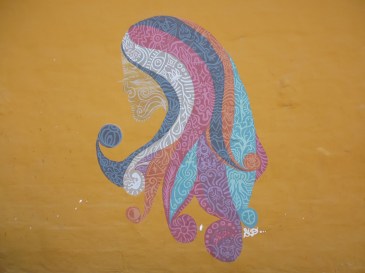
Another favourite public artwork – Mother Earth on a wall of the finca

So, what’s life on our finca like? (Yes, I feel like I can say “our”… this little commune is a family). Well, there are 6 of us there are the moment: me, Miguel, Fabio, Peter, Jhonny and Jo (a British chica who lives at the finca part-time). Miguel and his brother Luiz (currently in the US) run the finca as a place to practice clean living and use plants as medicine. It’s completely vegan, with each person taking the task of making meals or cleaning each day. My load is pretty light as I’m the only person paying to stay there (25,000COP/day) as the rest are lifers, but it feels good to chip in when it’s possible.

P1000027
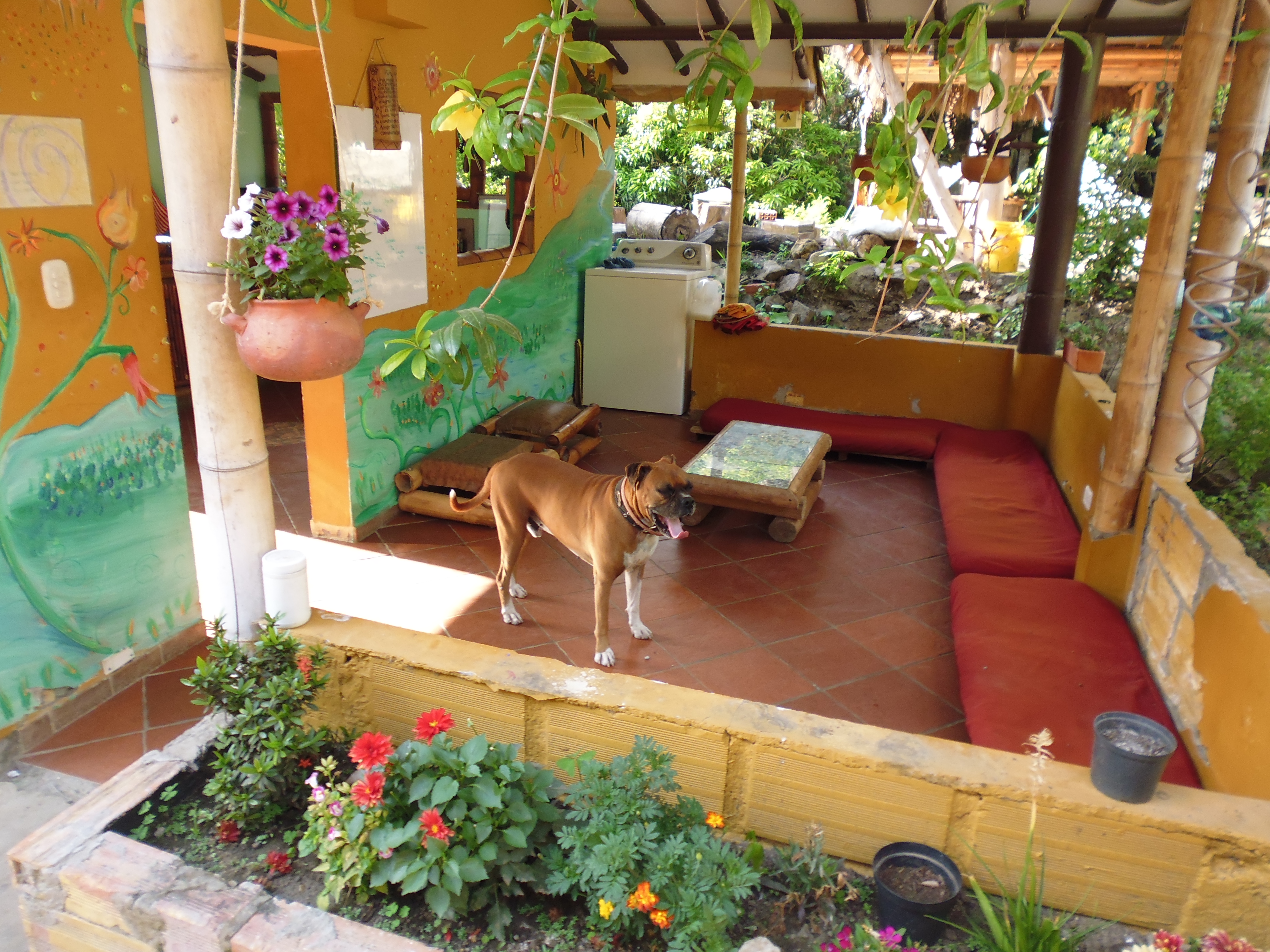
The communal space where we share meals and I hang out with my new canine BFF, Mikey.

P1000031

While it’s easy to get along with everyone, I’ve loved spending time with Jhonny. He’s a 21 year old guy, originally from Bucaramanga. He had a tough and bumpy road in life until getting to the farm, and here he’s found a great place. The last few nights he’s taught me salsa while I’ve introduced him to blues, jazz, funk and country music. I’ve been amazed at the reaction Alan Jackson has received… Everyone seems to love “Livin’ on Love” and Jhonny’s two-step is steadily improving.

P1000040
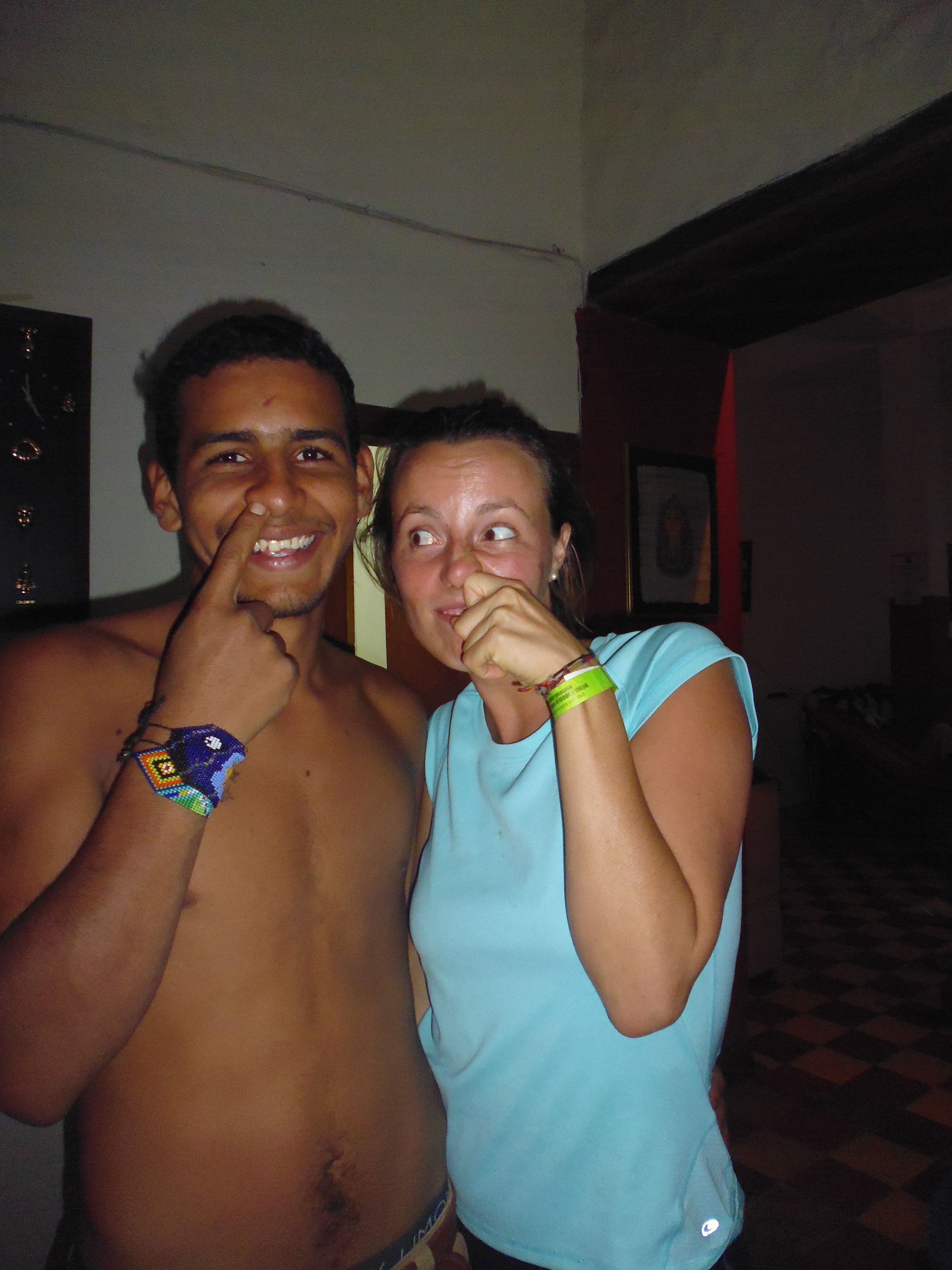
Jhonny and I after caving yesterday.
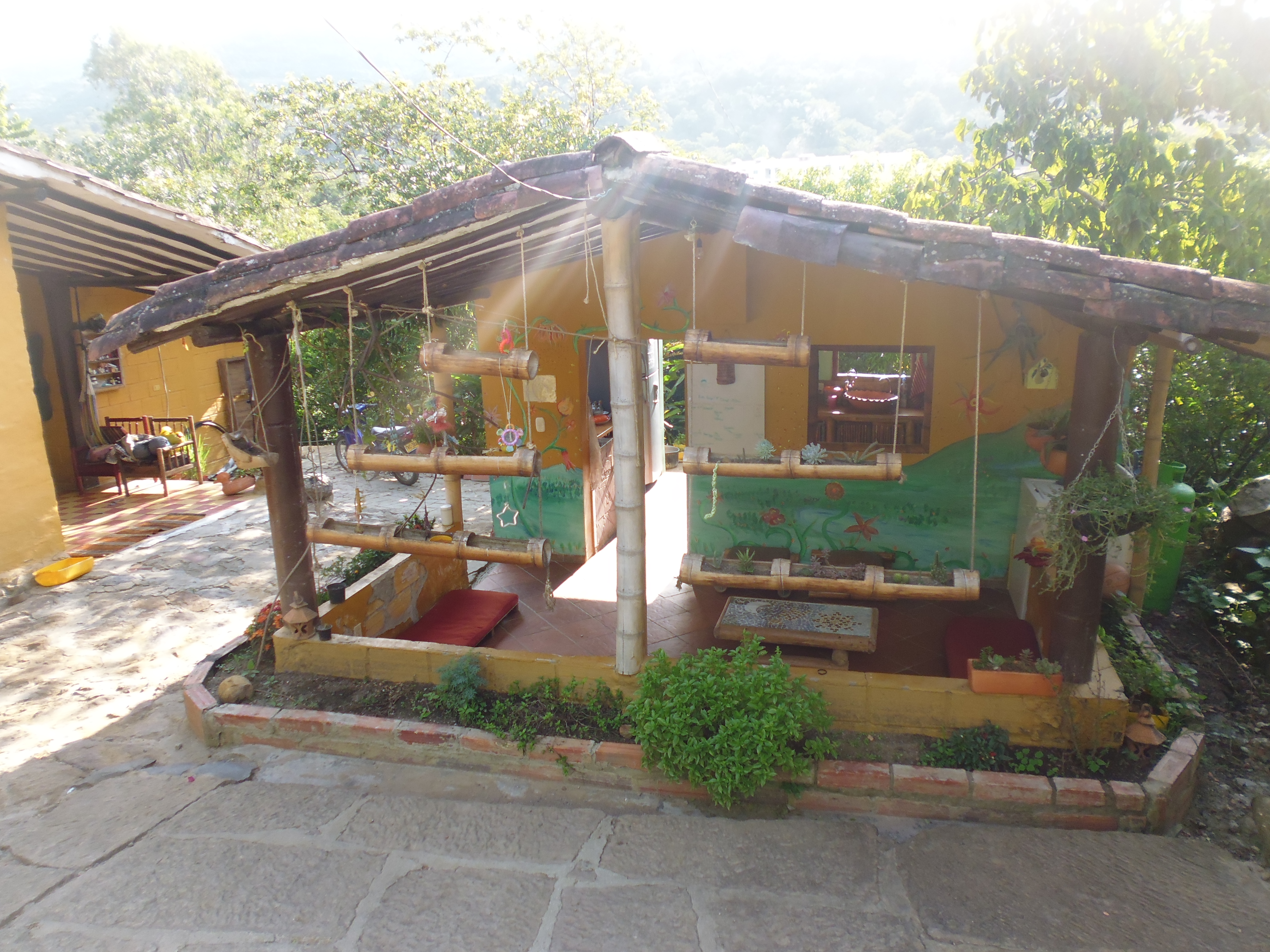
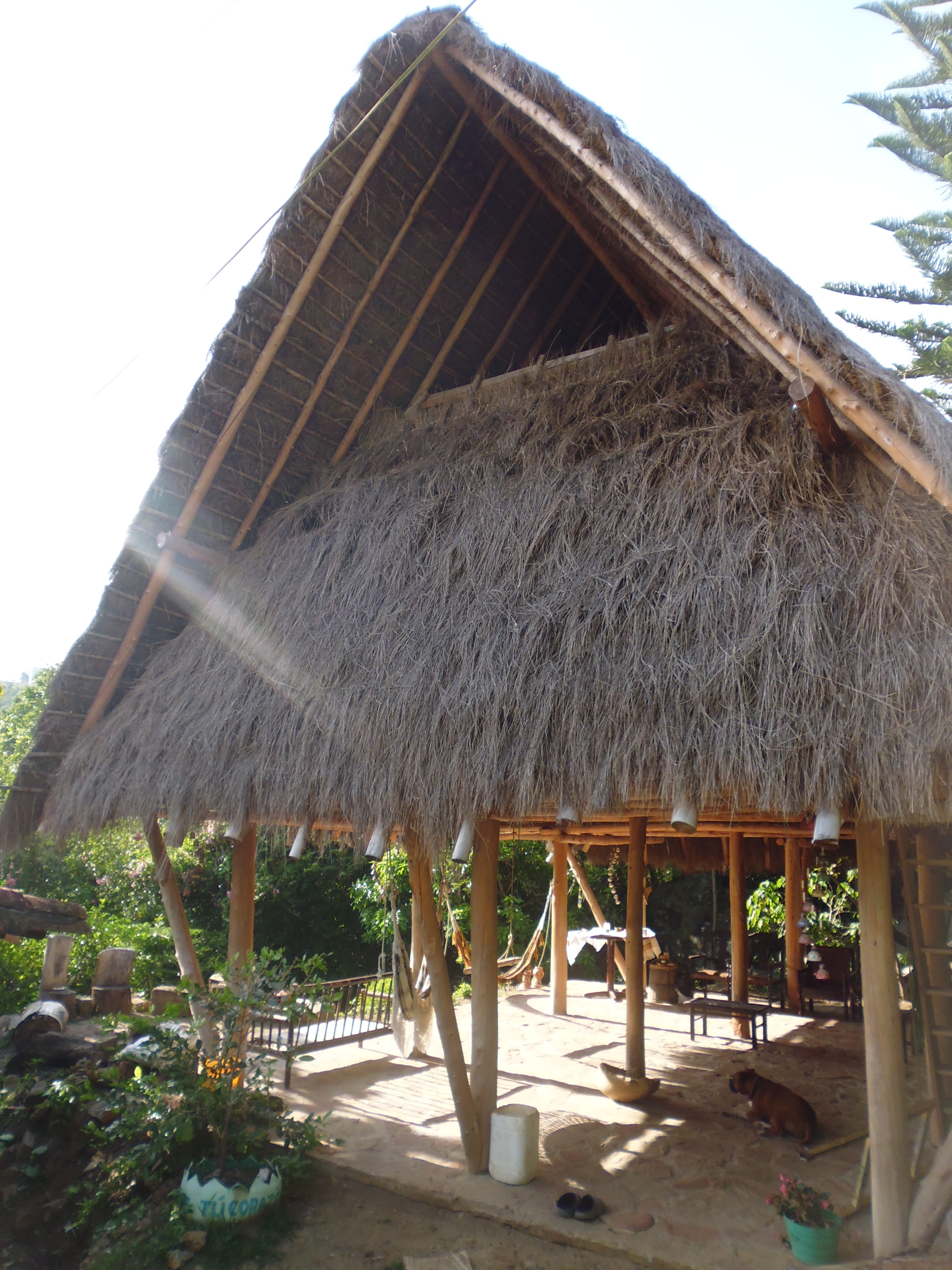
The maloca (I sleep upstairs)

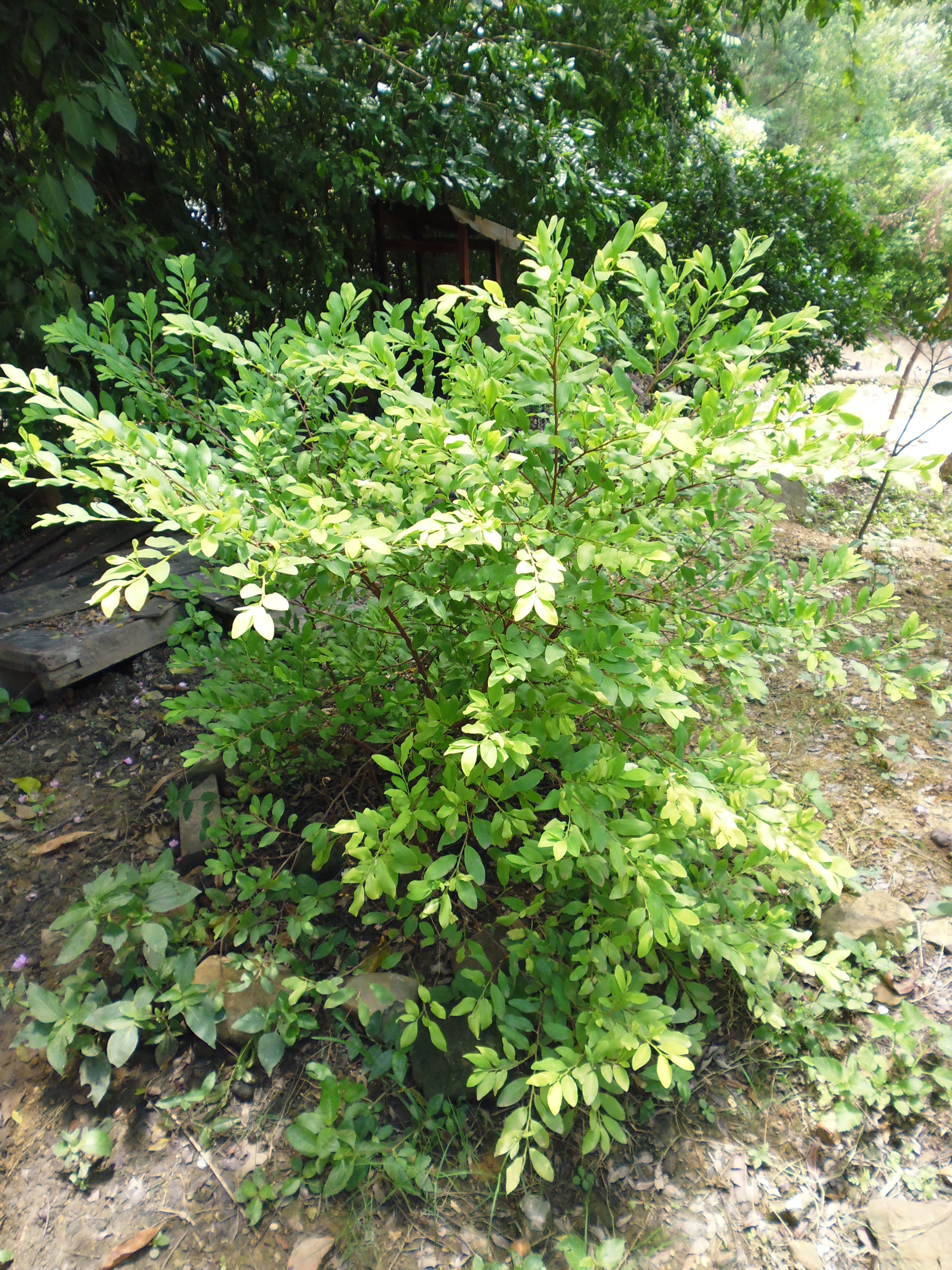
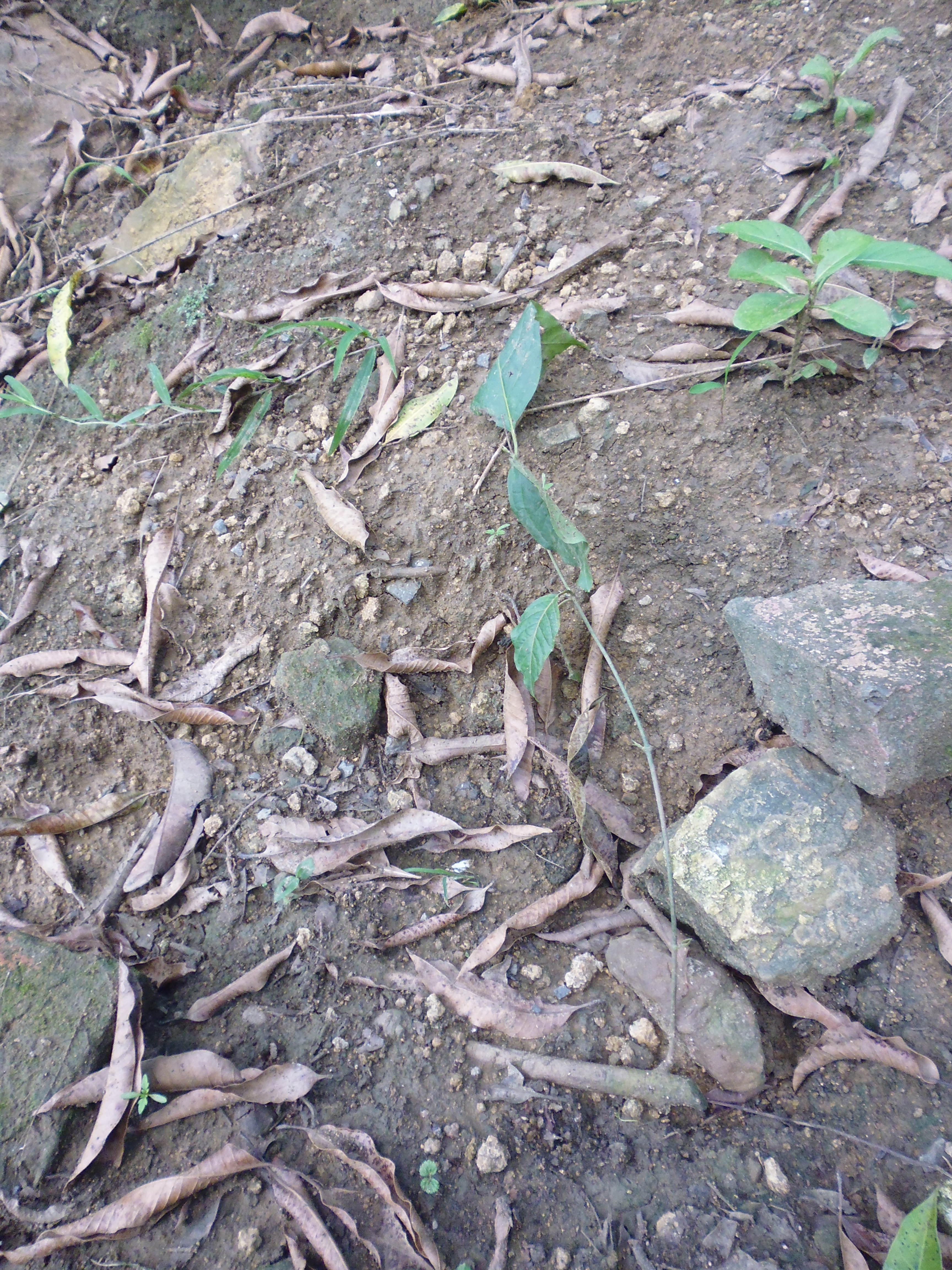
Miguel is an ardent lover of his plants, with tons of aloe vera, a hearty coca bush, a sprawling ortiga tree, a baby Ayahuasca vine, new tobacco sprouts, and a flowering scopolamine in the back yard by the river. Each plant has different qualities which can be both healing and dangerous.

P1000016
Coca tree – despite what you might be thinking, this is totally legal in Colombia. Each person is legally allowed to own up to 20 plans. The leaves are a mild stimulant when chewed, giving the user a burst only slightly stronger than a cup of coffee but lasting much longer. The leaves must be picked by women only, with 1/3 of the leaves taken at each harvest.
P1000008
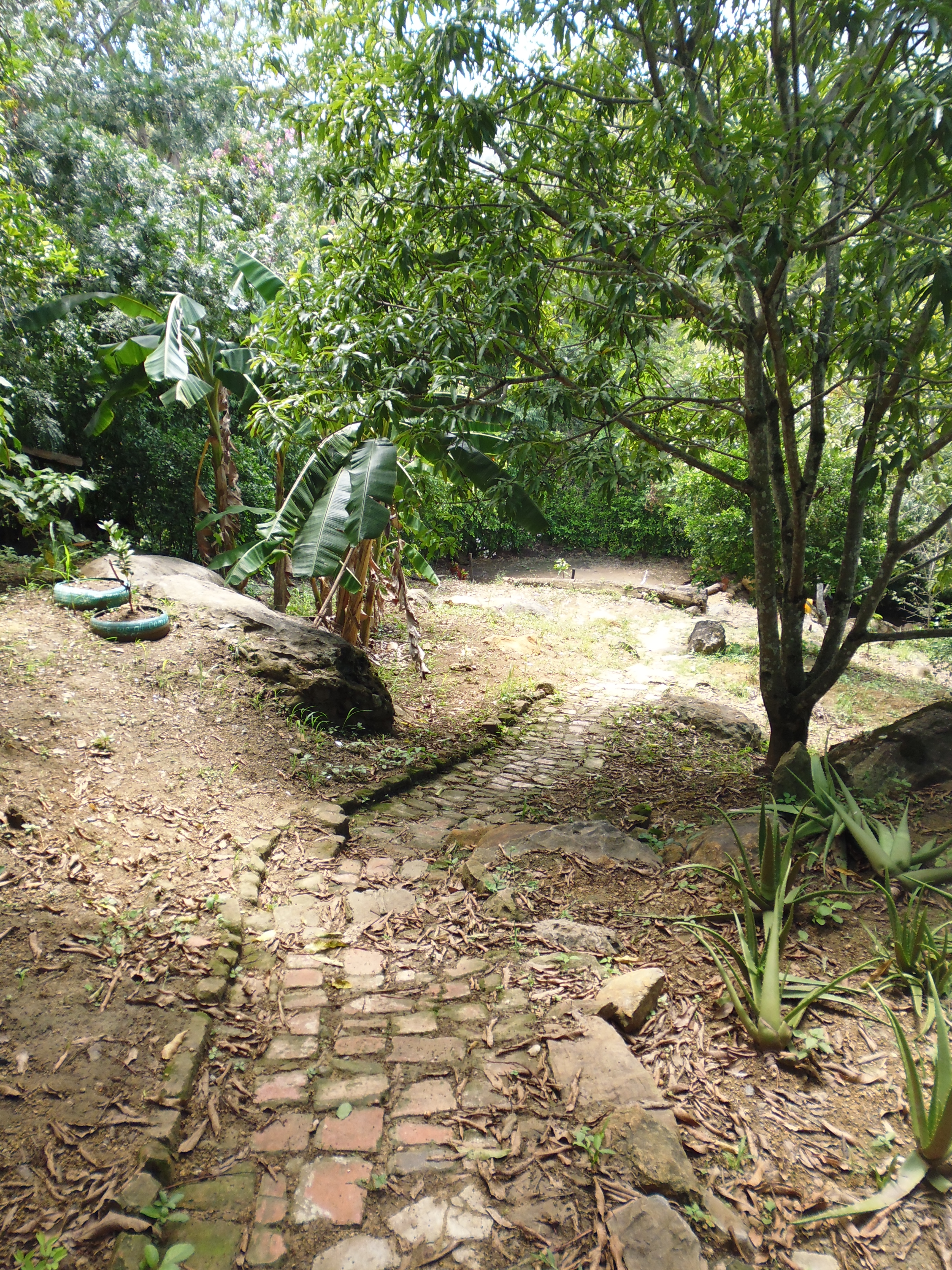
The path in the garden down to the river. Aloe vera plants, at right, grow in abundance. They can be excavated whole and hung upside down to purify the air in addition to more popular uses for wound and skin care.
P1000009
Baby Ayahuasca vine. Miguel and his brother brought this from the jungle in the south of Colombia. They hope this vine will grow and wrap itself around a neighbouring tree, eventually growing to the width of your thigh. Ayahuasca has been used to treat addiction, mental illness, depression, and numerous other disorders. It is considered a sacred and powerful plant, the “Mother”.
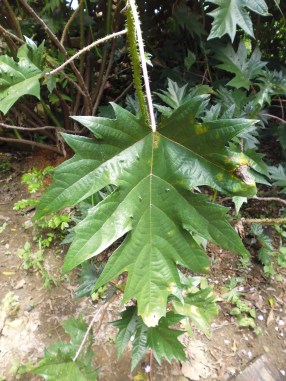
P1000012
Leaf of the ortiga tree. The branches and underside of the leaf have thousands of tiny thorns, and is used externally on the skin as a purifier and blood detoxifier (similar to nettles).
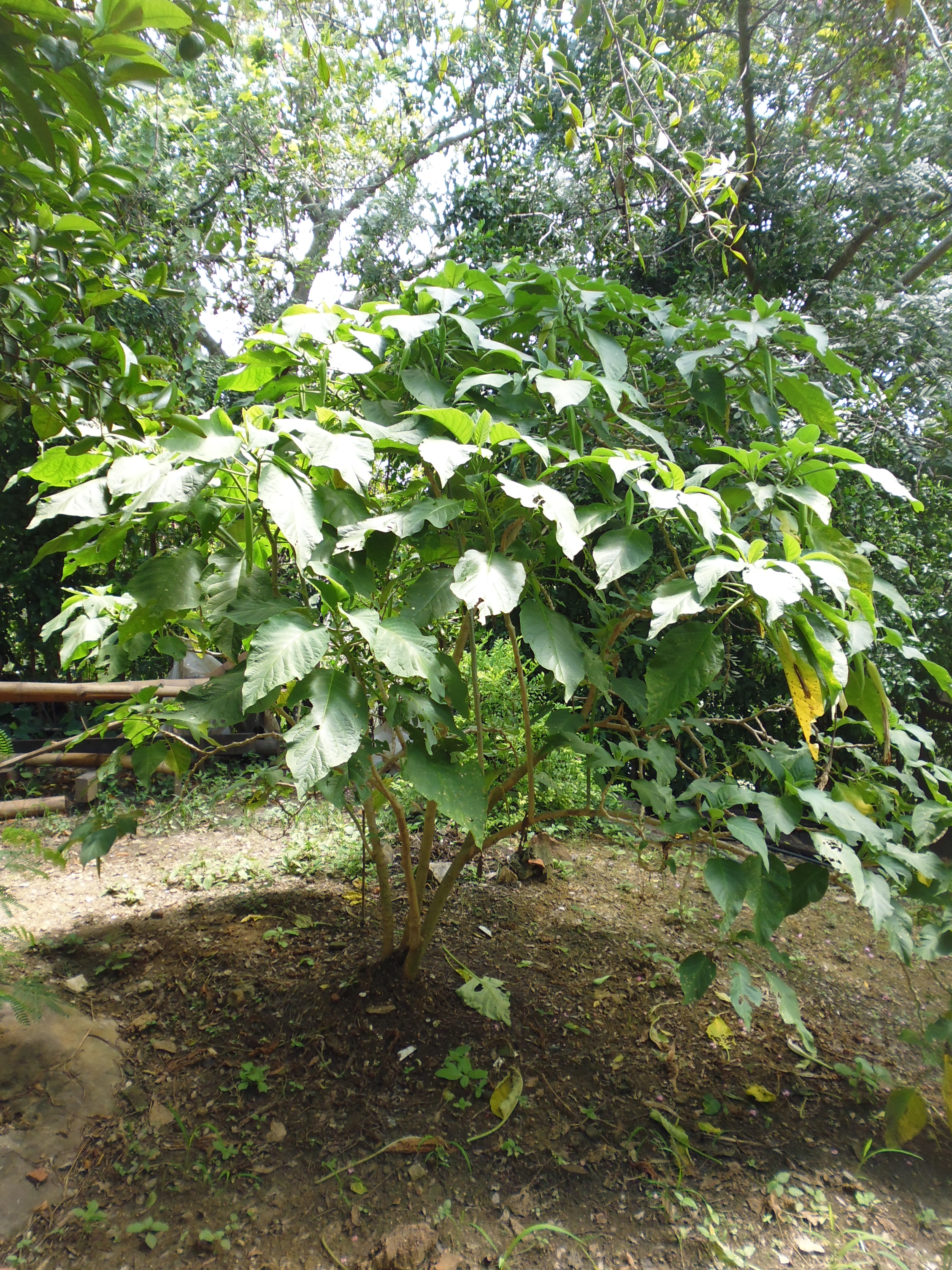
P1000011
Scopolamine tree… If you’ve seen the Vice documentary* on people becoming being robbed after having powder discretely blown in their faces, this is where it comes from. Scopolamine makes the victim extremely succeptible to any suggestion and will willingly hand over anything the perpetrator asks for. On the other hand, it also has great anti-nausea and anti-inflammation properties.
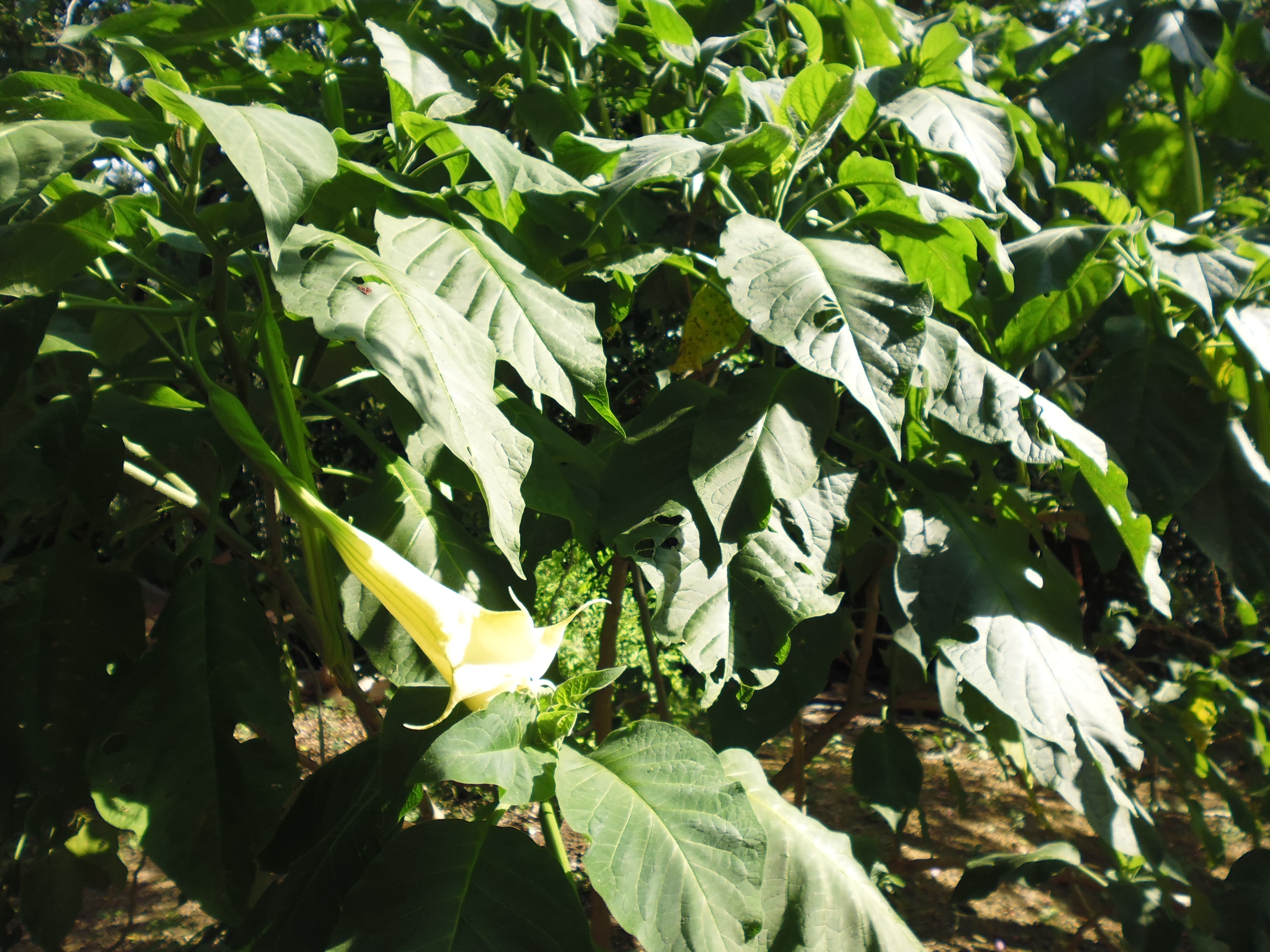
P1000023
The lovely scopolamine flower
P1000036
Another sacred plant of the region – tobacco. Tobacco is believed to carry protective elements and in pure forms is an anti-inflammatory agent that has been shown to reduce risks/delay onset of Alzheimers and Parkinson’s. Tobacco is also used as an agent to increase absorption of other medicinal plants. Can be taken as a gum salve (like chew), smoked or snorted (ouch). Effects are calming and give the user a clear and focused mind for better discussion in group circles.

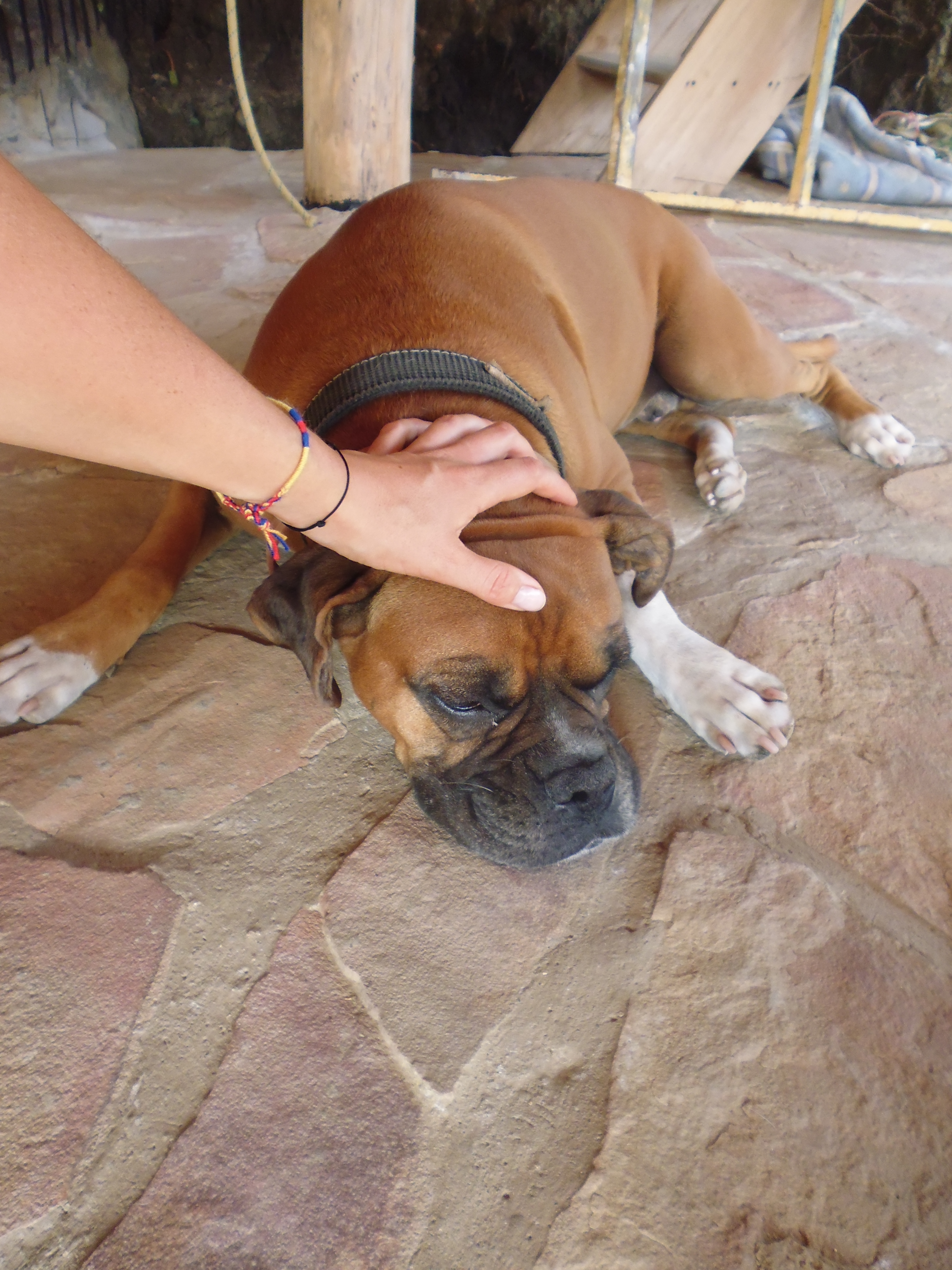
Among my other teachers, there is Mikey and his life partner, Lupé. After being attached by a German Shepherd as a kid I’ve always been afraid of dogs. Even when my brain says it’s okay, my body has always reacted with fear to a bark or even a sniff. These two have helped me immensely… While they look scary when they bark at passers by, they are love buckets and the biggest sucks for attention. I’ve spent many happy nights hanging out with these two.

P1000030
Mikey
P1000038
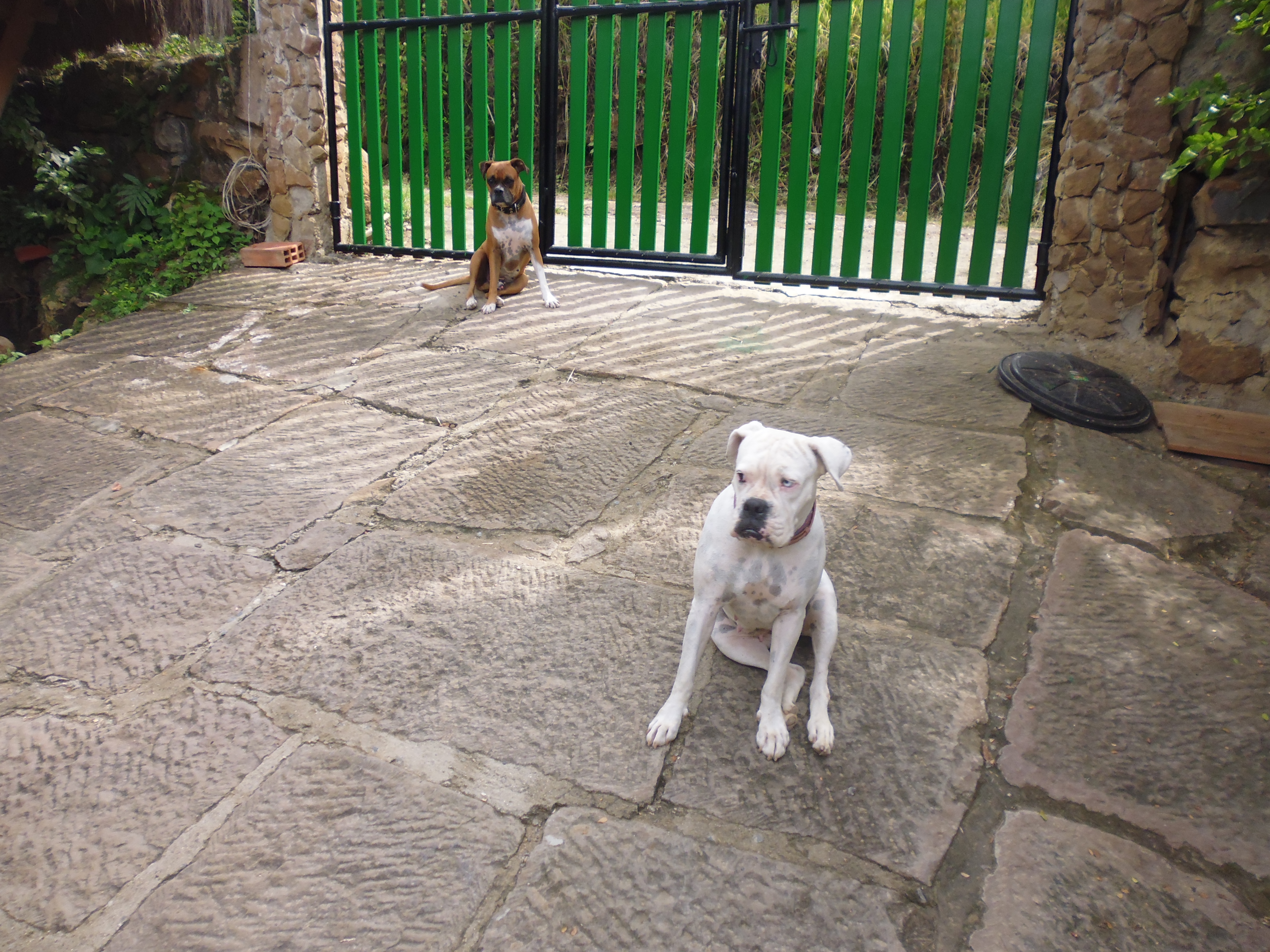
Mikey and Lupé, life partners. Their puppies are spread amongst the other fincas in the region.

Today I’m off to the Chicamocha Canyon – the second largest in the world (after the Grand Canyon). I’m leaving late this afternoon so the heat might be intense, but I’m happy to just get out for a while… Sunday is the start of my yoga teacher training in Ecuador so time is getting short!

I’ll send an update out again soon. Thank you everyone for all of your well wishes and for reading this. Love you all very much!

-The Beatnik

*Vice documentary on scopolamine: https://www.youtube.com/watch?v=ToQ8PWYnu04 (I haven’t actually watched it and Mom & Dad, I suggest you don’t either.)

Cheap Thrills

San Gil is the “Adventure Capital of Colombia”. You can do almost any extreme sport here – they have paragliding, Class 5+ rapids, caving, canyoning mountain biking and cliff jumping. By western standards it’s all cheap – you can paraglide for 120k COP (less than $55CDN). Rafting is even cheaper (though the cost of your life or small intestine if you pick up a little parasitic friend* in the polluted waters can make it a bit more costly).

My favourite activity however – bar none – is the domicilio. A domilicilio, (aka motorcycle taxi) is the best extreme sport you could ask for. It’s also the most economical thrill, with a 3km trip costing about 75 cents. There are few things I love more than hopping on the back, putting my blind faith in the driver (quite literally it’s often blind as sometimes I prefer to close my eyes, feel the wind against my skin, hear the bark of the dogs chasing us and put my fate in the hands of destiny). San Gil is nestled in a valley, surrounded by mountains that are a blast to zoom up and down, hugging the curves of the road, speeding across the yellow line and dodging oncoming gravel trucks. The helmet the drivers carry is a mere formality; most are ill-fitted with the insides coming out and dangling chin straps. I’d much rather let my hair blow in the wind – just as I’d rather go quickly should we crash instead of sit on the side of a Colombian highway clinging to life with an unexpectedly effective chinstrap.

P1000002

*In the past week I’ve met 2 people carrying parasites. A third is extremely likely but is not yet diagnosed.

When Everything Fails, Adventure Starts

san gil

Yesterday I attempted to watch the sunset from a cross on a hill high above the small city of San Gil. (I say “attempted” because being surrounded by hills, engulfed in clouds is not really an ideal sunset spot). I was there with a skinny, nomadic sadhu-looking Colombian named Fredy. I met Fredy weeks ago when running the Valle de Cocoro and we just happened to bump into each other again while here. He hiked 10 days across the mountains to reach San Gil. He’s a wanderer, complete with coloured strings around his wrists, greasy not-quite-dreads, scruffy facial hair, and a blue scarf tied around his head like an Anthropologie ad. Funny how people spend big money to look as though they have nothing, to look like Fredy.

Anyways, Fredy and I have very interesting Spanglish conversations covering everything from mountain spirits and Amazonian Shamanic practices to the conjugation of verbs and the quality of bread sold at the local panderia. He asked me yesterday if my hair has always been short, and I said no, I just cut it in October… to which he replied a year had passed.

Wow, a year. It’s been a year since I first seriously considered taking El Sabatico. Thinking on this, I realized that when things go to shit is when it gets fun. When everything fails, adventure starts.

Last year, I felt like a lot in my life was failing – job, fitness, learning, relationships, health. Even my hair was failing – I had to cut it right off. This is a bit dramatic… nothing was happening to make it so bad and I didn’t need to run from anything. Rather, it just felt too unchanging and unchallenging. Stagnant. Claustrophobic.

For a time I really struggled with this idea of failure. I’d only been in my position a year and wondered what people would think. Would they think I’d been fired? Was it a mistake to leave another city, another ‘home’ and move on again? Was I giving up too soon? Being too sensitive? Not tough enough? Where would I end up?

Isn’t the idea of adventure synonymous with the unknown? Most people have positive connotations with the word ‘adventure’, but it’s always characterized by periods of hard times before the good comes along. The difference between calling something an adventure and a failure is how long you stick with it. Most of the time our failures are defined at times that we give up while still wanting something.

Sitting under the cross overlooking San Gil, I realized that in many ways I’m in the same position as one year ago… Recently I thought I’d figured out what was next, had a plan starting January, knew where I’d live, how I would work, what I’d learn. I had even thought about neighbourhoods and sending Colombian artisan furniture back (yes, furniture! A huge commitment!). However, that plan unraveled and I’m back to a similar place as I was a year ago – not knowing. Not knowing, and not always comfortable with it.

(Ironically, Tom Petty’s “Freefalling” just came on the radio.)

The best times, the best adventures have happened when I didn’t know what was next – falling into a river while hiking Algonquin in 3 feet of snow, jumping off a speeding train in Mumbai, sharing 13 hours of leg sweat with strangers on a bus from the middle of nowhere to Mombassa (we hoped), fainting on a Malaysian subway and regaining consciousness on the platform with thousands of busy feet walking past, not knowing who or where I was. I can’t say any of those times were comfortable, but they did create the best stories and the greatest memories. And each time I got where I needed to go.

(“Learning to Fly” just came on the radio. Not even joking.)

Why do Cockroaches Die on Their Back?

I’m thinking this as I lay on the floor, looking under the bed beside me. I’m sleeping on a mattress on the ground because it seems cleaner than the bed – though I could be mistaken. When I sleep in places like this I always feel like my skin’s sensory perception is heightened, as if little critters are crawling all over my body. Most of the time this isn’t true and it’s all in my head, however the idea lingers after staying for 3 nights in a guesthouse in Cambodia early in my dirty-backpacking days. I thought I had been feasted on by mosquitoes or mini-spiders, counting 120 of the itchiest bites on each of my legs below the shins. It wasn’t until weeks later that someone told me the bites were from bedbugs: tiny, nearly-invisible little thugs that go out of their way to mess you up. Thankfully, the only other time I’m aware of living with bed bugs was in Toronto at Global Backpackers (I’d rented out my flat on Airbnb while out of town but had one night when I was in TO but not yet able to get back in my place). Bar none, that was the worst overnight stay of my life. After traveling several countries with all states and standards of cleanliness, I am embarrassed to say the worst experience was in my own country. The place had bed bugs, an exploding pipe in the hallway, windows that weren’t (…they were filthy and filtered no noise from Queen and Spadina below). I left around 2am, threw everything I owned in ultra-hot wash and spent the night in that restaurant at the bottom of the Thompson Hotel eating breakfast and not really enjoying unlimited coffee refills.

This is just a dead cockroach and a few more bites of unknown origin to add to the collection. Add in two loud Spanish women drinking the cheapest aguardiente you can buy and you have my current reality. However, I must say a dead cockroach beats the living. When I first started with St. Jude I was working in France and was cost-conscious so booked into what looked like a nice hostel in Port Vieux in Marseilles. Before bed I went to close my curtains and was rained upon by about a dozen cockroaches living in the drapes. One dead cockroach on a dirty floor in a dank smelling bed really isn’t so bad by comparison. He won’t come looking for me in the night. Plus, the morning holds promise – arepas, huevos, cafe and hopefully internet connection reliable enough to get me down to San Gil where I can run, learn more Spanish and do some climbing/rafting/caving/paragliding.

But really, I think it’s actually a good question – why and how do cockroaches die on their back? They’ve got no real predators that I’m aware of and due to the curved nature of their backs and bottom-heavy design it’s not like they wheeze, gasp fall to one side and naturally roll onto their shell. Why do you always find dead cockroaches on their back then? Every time I’ve found them post-mortem they’re in this pose. Since they’re virtually un-killable do they finally get tired of the loud Spanish and flowing aguardiente, expose their vulnerable bits to the sky and ask the Virgin from the church across the street for deliverance?

Running Minca to Paso del Mango

“The Book” in Minca says this should take 5 hours walking and it’s true, unless you don’t realize some parts of the trail are signposted in two opposing directions and find yourself remembering the cougar talk from the West Coast Trail while jungle bushwacking. The wardens tell you to look up as you pass flowing water and never to crouch before check if there is a cat in a tree above you, and, of course, preferably don’t hike alone.

Thinking of this while lost in the jungle isn’t particularly helpful, especially considering the new factoid I’d learned from Survivorman: pumas are the 3rd largest cat and have extra springy legs, allowing them to jump up to 25m. Not that I’m a puma’s #1 choice, but as I kept thinking of what else I might stumble into out there, the puma might be my first choice.

That helped me firm up my decision to turn around and go back, despite what the signs said. Lucky for me I tried the other direction, was rewarded until I got lost again, stumbling into a cocoa field. No worries, backtracking worked again and eventually I made it to Paso del Mango in time for a stroll around local sights – a mini “Cuidad Perdida” archaeological site, numerous waterfalls you can swim under and a cacao farm complete with a chocolate facial. Pumas to facials – it was a weird day.

Blog at WordPress.com.

Up ↑